The first time I came across the phrase Pax Romana, I imagined an empire finally at rest. But the more I learned, the more that word peace began to trouble me. Roads, poetry, and grand public buildings flourished while Roman armies continued to conquer and suppress resistance. I wanted to understand how both stories could belong to the same two centuries, and whose experience the name Roman Peace describes.
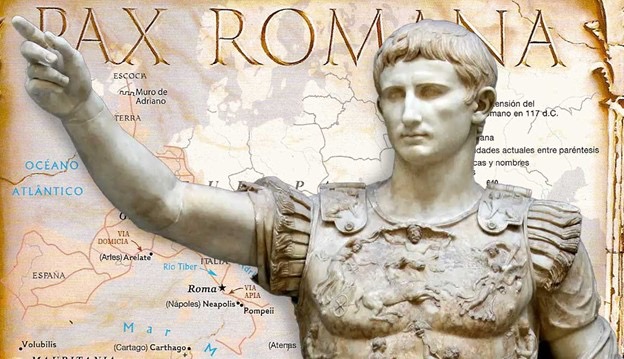
The Pax Romana (Latin for “Roman Peace”) was an unprecedented period of prosperity and stability in the history of the Roman Empire, lasting for around 200 years. Ushered in by Augustus's ascension as the first Roman emperor in 27 B.C., this golden era of political stability and security lasted until the death of Marcus Aurelius in 180 A.D.
During this period, the Roman Empire continuously expanded its boundaries, reaching its greatest territorial extent. It achieved this through conquest, diplomacy, and cultural integration, known as “Romanization.” The lack of powerful external or internal enemies boosted the empire’s stability. Thus, Roman emperors could focus on governing the empire, resulting in unprecedented growth in trade and commerce and a cultural renaissance that affected all parts of the vast Roman world.
Although comparatively peaceful, the Roman Empire was hardly devoid of bloodshed during Pax Romana. Tyrannical emperors killed political rivals as Rome brutally suppressed revolts in provinces such as Judea and Britain. And it continued its imperial conquests, prompting Caledonian chieftain Calgacus to quip that the Romans “create a desolation and call it peace.”
For many Romans, however, Pax Romana was a golden age of arts, literature and technology. It was a time when the empire doubled in size, stretching from Great Britain to North Africa and came to include a quarter of the world’s population, according to some estimates.
After purging his enemies in the wake of his great-uncle Julius Caesar's assassination, Augustus revived Ancient Rome’s political, military, and economic power during his nearly 50-year autocratic reign. By guaranteeing that Roman legions received pensions from the public treasury rather than from their generals, the emperor ensured that soldiers were no longer incentivized to be loyal to their commanders over Rome itself.
Pax Romana didn’t happen naturally. Augustus made deliberate decisions about where Rome should expand to and where it should stop. He also began aligning military policy with long-term goals, including defending territories Rome already controlled.
Augustus integrated newly conquered territories into the empire by decentralizing power from the capital to the local provinces. Provinces that accepted Roman taxation and military control could continue local customs and religions that didn’t directly violate Roman law, and “client kings” were allowed to rule on local and religious matters. Augustus also gained provincial support through political reforms, such as instituting a permanent civil service that shifted power from nobles to bureaucrats and creating a mechanism to investigate and punish corrupt provincial governors who exploited their positions for personal gain.
Political stability encouraged money lending and allowed long-distance trade to boom. Sea commerce thrived as the Roman navy under Augustus largely cleared the Mediterranean of pirates. Romans purchased luxurious silks and gems from the Far East and found markets for their glass and rugs as far away as India and China.
Imperial investment in infrastructure connected the provinces and brought economic benefits that many communities could not have achieved with local resources alone. Under Augustus alone, Rome built 50,000 miles of new roads that eased the movement of troops, information, and goods. Water flowing through Roman aqueducts allowed cities to prosper. Bridges and harbors built by Trajan as part of an enormous public works program also spurred trade.
Roman literature flourished under the rule of Augustus, who patronized artists who glorified the empire in their work. Virgil’s epic poem, the “Aeneid,” for example, not only tells the legend of Rome's mythical founder but also draws parallels to Augustus and paints an optimistic future for the empire. It was during this time period that poets such as Horace penned classic verses, and Livy wrote his monumental history of Rome.
Throughout the Pax Romana, the Romans assimilated provinces through cultural imperialism that sought to recast conquered peoples in their own image. The spread of Roman hairstyles, clothing, literature, and theater outward from the capital created a common culture among educated elites, who were encouraged to adopt Roman citizenship and even serve in the Roman Senate. This was particularly true in western regions of the empire that lacked the more sophisticated urban cultures found in eastern provinces.
There was a sustained effort to encourage people to adopt Roman names and behaviors and to structure settlements in a new fashion that included Roman building processes. Roman emperors built infrastructure that sustained a way of life that was distinctly Roman. These included chariot race stadiums, forums, amphitheaters, and bathhouses, which were integral to Roman civic life. The development of concrete from a mixture of volcanic sand, high-grade lime, and small stones or broken bricks enabled the construction of rounded arches and domes, which became symbols of Roman imperial power.
While Rome recast cities such as London and Beirut in its own image, massive beautification and building programs implemented by emperors transformed the imperial capital from a dilapidated town on the Tiber River into the gleaming Eternal City. During this period, Romans built landmarks such as the Colosseum and Pantheon. Augustus expanded the Roman Forum and oversaw the construction of more than a dozen new temples, a new Senate house, and public halls, which caused him to proclaim on his deathbed: "I found Rome a city of bricks and left it a city of marble"
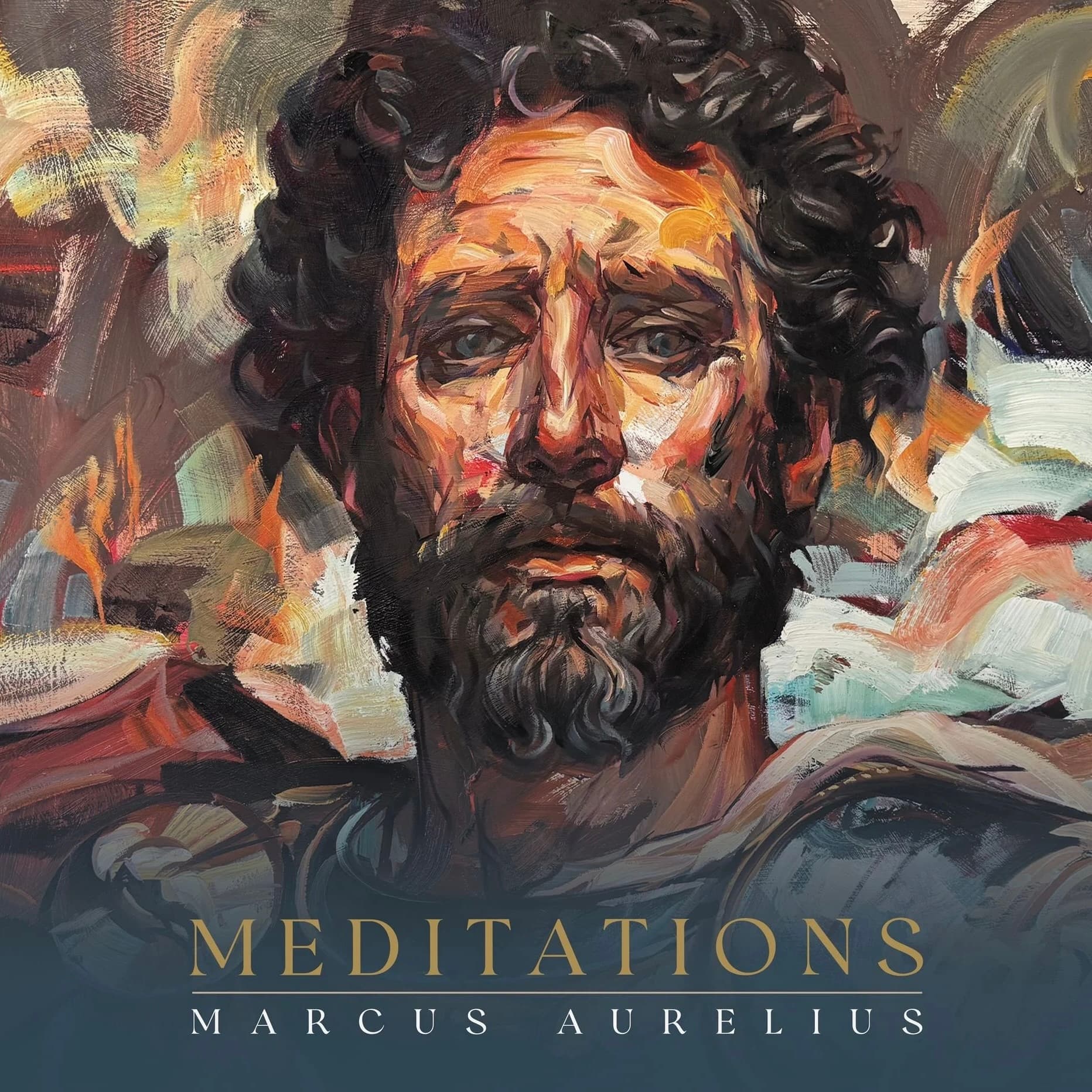
Pax Romana ended following the death of Marcus Aurelius, who broke with recent tradition by anointing his son Commodus as his successor. Plagued by decadence and incompetence, Commodus's reign ended in 192 A.D. with his assassination, which sparked a civil war that ended a golden age of Roman history.
References:
Zanker, Paul. The Power of Images in the Age of Augustus. Translated by Alan Shapiro. Ann Arbor: University of Michigan Press, 1988.
Garnsey, Peter, and Richard Saller. The Roman Empire: Economy, Society and Culture. Berkeley: University of California Press, 1987.
Woolf, Greg. Rome: An Empire’s Story. Oxford: Oxford University Press, 2012.