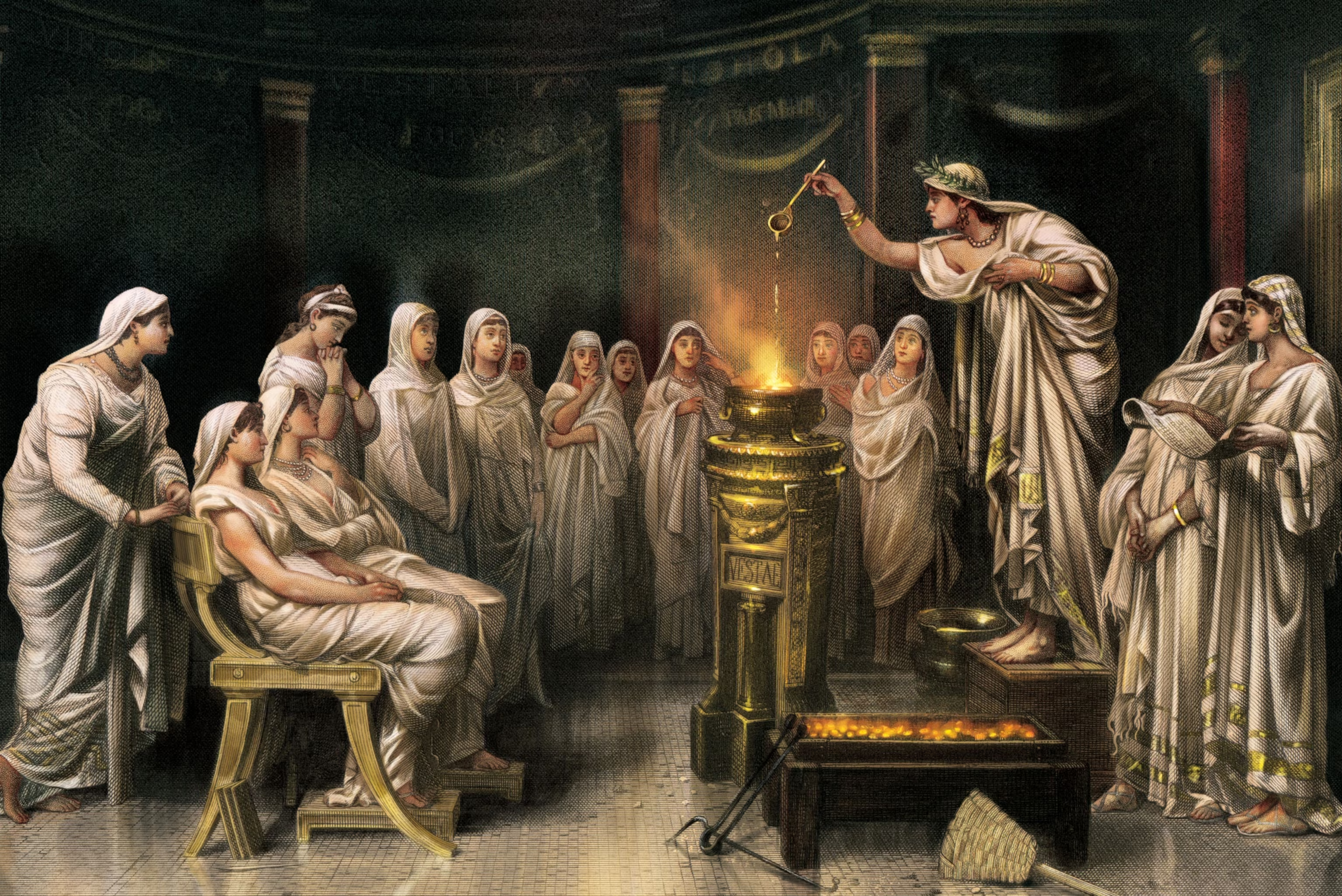
In the center of ancient Rome, not far from the busy Forum, stood a quiet and sacred building known as the House of the Vestal Virgins. Here lived six priestesses whose duty was one of the most important in Roman religion: guarding the sacred fire of the goddess Vesta. As long as that fire burned, Romans believed their city would remain protected. If it ever went out, it was seen as a terrible omen. The responsibility was enormous. The Vestal Virgins held rare power and respect, but their position also carried intense pressure and terrifying consequences.
Religion played a major role in Ancient Roman society and the foundation of the mutual parasocial relationship between humans and the divine. One of the most important deities in the extensive Roman pantheon was Vesta, the goddess of the hearth and home, and the protector of Rome. Her most devoted worshippers included a fascinating sect of female priestesses, known as the Vestal Virgins, who lived a tense but privileged existence within the temples, responsible for a variety of tasks and practices to properly revere the goddess, as well as holding a surprising amount of power.
According to the myths and legends of Roman faith, Vesta was Jupiter’s older sister and was not like her brother at all, choosing to remain a virgin her whole life (meanwhile, Jupiter was married and enjoyed many dalliances with humans, spirits, animals, gods, half-gods, and various other creatures and beings, regardless of gender or species). Vesta preferred to keep her dresses on and tend to the hearth at the center of the gods’ household. Vesta’s most devoted followers established the Temple of Vesta in the center of Rome, in the Forum Romanum, and created a cult dedicated to her and to serving her.
It is important to distinguish a notable fact: a cult in Ancient Rome is not exactly like the cults of the modern age. Cults in Rome were enigmatic and oriented more toward pious devotion to a single god within the pantheon. Roman religious cults were elusive and mysterious organizations, but closely associated with their faith, dedicated to a singular concept or deity with a focus on appeasing the will and desire of that individual concentration in an effort to achieve Pax Deorum, or peace of the gods, a harmonious, reciprocated bond between humans and the divine.
The Vestal Virgins, or Vestales, were six women chosen as children between the ages of six and ten to devote themselves to the goddess Vesta for thirty years of their lives. They wore all white stolas, or floor-length overdresses, over their white tunicas (tunic dresses) and wore their hair with six tressed braids, or seni crines, under a woolen headdress or headband (influla) and ribbons (vittae) of red and white. The women were to remain both physically and socially clean and unblemished, as well as celibate during their time in the shrine, serving the goddess by tending to the hallowed, perpetual fires in the sacred hearth, caring for the place of worship’s grounds and building, presiding over religious and public events, teaching, and preparing foods for rituals. By doing so, the Vestal Virgins preserved the heart of Rome and guarded the very fabric of the city and, in turn, the Republic/Empire. These women were priestesses and the only collegia, or full-time clerics, in the Roman religion, holding tremendous allure and power in Rome.
The priestesses held extraordinary power for women during the Roman period, revered by ordinary people and the elite alike for their dedication to Vesta and Rome. To many, the Vestal Virgins held influence and could grant favors, serving as patronae, or patrons and protectors. By gaining favor with the Vestal Virgins, one might secure support for one's endeavors from both the priestesses and the goddess Vesta herself. After thirty years in the Temple, a Vestal Virgin was allowed to marry, although only a handful did, as it was seen as unlucky. Many considered that they had given themselves to Vesta, and how good can human matrimony be if you’ve been married to a goddess?
Vestal Virgins, even with their perceived freedoms, faced tremendous pressure to be dutiful and honorable, protectors of the secrets of the temple, the cult, and to Vesta, and to remain virgins during their years of service. Their order was overseen by the Pontifex Maximus, or highest pontiff, who not only picked the girls to become priestesses, but also doled out punishment to those who failed in their responsibilities. Despite being male, these priests were not allowed to participate in any rites or rituals associated with Vesta and her priestesses; they were simply overseers of the Vestal Virgins (even in close relationship with a goddess, women were subject to male oversight). If the fire of the temple went out, the priestess responsible would be whipped to death. And if a Vestal Virgin did lose their virginity, they would be imprisoned for the remainder of their life or, more likely, be put to death by being buried alive in the sacred city limits, or pomerium or molten lead was forced down the throats of priestesses who had lost their virginity.
The last of the Vestal Virgins served in the temple until 391CE, when Emperor Theodosius forbade the Vestal Virgins from tending the sacred fire, as it was illegal to practice paganism under his Christian rule, allowing the hearth to cool and the sacred flames to go out. This may not have been the best for Rome, as by the latter half of the following century, the Goths (a group of Germanic tribes) raided and overthrew the Roman Emperor in 476CE. Maybe the sacred hearth of Vesta was helping protect Rome.
The story of the Vestal Virgins is about the strange mixture of power and restriction that defined women’s lives in ancient Rome. These priestesses stood at the center of the Roman religion. They held privileges other women could only imagine. But they also lived under constant scrutiny, knowing that one mistake could destroy everything.
The Vestals remind us that even positions of great honor can come with heavy expectations. In Rome, their lives symbolized the city’s stability and purity. Their sacred flame burned for centuries, representing Rome itself — powerful, disciplined, and always watched by the gods.
References:
Mark, Joshua J. “Vestal Virgin.” World History Encyclopedia. September 2nd, 2009.
Sihvonen, Outi. “The Vestal Virgins and Power: Tradition and Change in Third-Century Rome.” Tampere University. August 29th, 2020.
Wildfang, Robin Lorsch. “Rome’s Vestal Virgins.” London: Routledge, 2006.