Hannibal is at the gates! Hannibal is at the gates! For centuries, these were the words with which Roman mothers scared their children, and with good reason.
Starting from their victory over rebelling Latin allies in 338 BC, the Roman Republic began to expand rapidly, and by 270 BC, the Romans controlled most of the Italian peninsula. Thanks to their uncanny ability to turn former enemies into subordinate but annoyingly loyal allies, the Romans not only united the peninsula but created a military machine with an unparalleled ability to mobilize its population for war, an ability none other settled society of western Eurasia could match.
Yet, the initial Roman conquest outside of Italy met with incredibly fierce resistance, as Carthage, the rich mercantile North African Republic, for over sixty years, fought tooth and nail to oppose the Romans. In the form of Hannibal, the Carthaginians were to inflict some crushing defeats on the Romans. They even threatened the Eternal City itself with destruction. But who were the Carthaginians? And what made them so powerful?
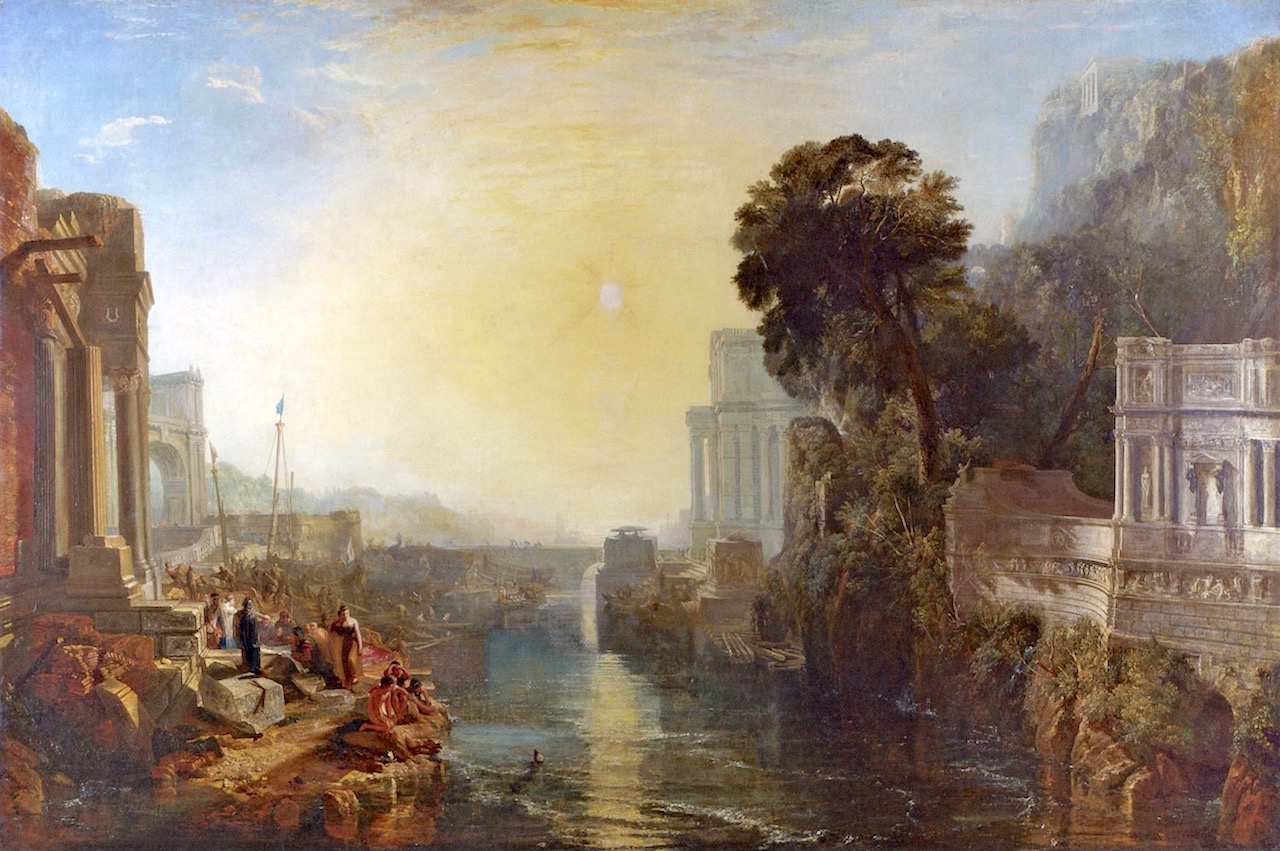
According to their foundation myth, the city of Carthage was founded in 814 BC. The city’s founder was a Phoenician royal Princess called Elissa, also known as Dido. Dido was the sister of King Pygmalion of Tyre, but after her brother murdered his husband, Dido fled Tyre to arrive in modern-day Tunisia. She and her companions were welcomed by the local Libyans, who allowed the refugees to create a settlement, though not a big one, as according to their deal, Dido was allowed to create a settlement that could be covered by an ox hide. The clever Dido, however, had an ace up her sleeve and sliced the hide into thin pieces, thus gaining more land than initially anticipated.
Whether the legend is true or not is unknown, but one would guess it probably is not. Thanks to the defeat and later destruction of Carthage at the hands of Rome, Carthage is mostly remembered through the writings of the Romans and Greeks, people who had numerous conflicts with the Carthaginians and presented them in a rather stereotypically negative way. Through tricks or otherwise, Carthage had been founded by Phoenician settlers, and all the way to the city’s destruction, Carthage remained culturally dominated by Phoenicians.
At first, the city was probably still under the control of the mother city Tyre, which was a flourishing port, but with time, as the Middle East descended into chaos following the rise and fall of the Neo-Assyrian Empire, the Phoenician diaspora of the western Mediterranean became independent from the mother city. With the decline of Tyre, a power vacuum was created, and Carthage moved in to fill it. By the early fifth century BC, the Carthaginians became the dominant city of the Western Mediterranean by subjugating other coastal Phoenician towns along the coasts of North Africa, Spain, and Mediterranean islands.
Just when the Great King of Persia, Xerxes, was invading mainland Greece, the Carthaginian King Hamilcar landed on Sicily at the invitation of a local Greek tyrant. The ruler of Carthage brought a large army with him but was badly defeated at the Battle of Himera by Gelon, the ruler of Syracuse. By the time Carthage returned to the island in 410 BC, all those who may have participated or even remembered the old expedition were either ancient or dead, and the next seventy years were to be much more conflict-ridden in Sicily, as Carthage and the Greeks led by Syracuse were to fight each other in five wars, until peace was reestablished in 339 BC. By this time, the spheres of influence were more or less established, with the Carthaginians ruling over the western part of the island and the Syracusans over the eastern.
A final Greek-Punic War erupted in 278 BC when King Pyrrhus of Epirus was invited to the island by the locals. An already legendary figure in his mid-40s, Pyrrhus took charge of local forces, beat the Carthaginians at Syracuse, and pushed them back to the western tip of the island at Lylibaeum, but failed to take this stronghold. Thus ended the last Greek-Punic war, the eighth between 480 BC and 276 BC, leaving the western half of the island in the Carthaginian sphere of influence and the eastern in the Greek, but if either side expected to settle with what they got, they were in for a rude shock, as just across the Strait of Messina, a new superpower was on the rise, ready to put both the Carthaginians and the Greeks in the shade.
During the Sicilian wars, the government of Carthage went through a significant transformation. As mentioned earlier, Hamilcar, who led the 480 expedition, was described by ancient Greek sources as King. Though there may be a chance that there’s a misunderstanding, it is likely that, at the time, Carthage was still a monarchy. However, by the time Agatocles invaded Africa, Carthage transformed itself into a republic and quite a well-functioning one. In the words of Aristotle, alongside Sparta, Carthage was the best-governed city in the world, whose government created a perfect mix of monarchy, aristocracy, and democracy.
The monarchy was represented by the magistrates elected by the Carthaginian citizen body. The highest magistrate was called sufette, but just like in Rome, the Carthaginians elected two such magistrates who served in tandem during their term. The aristocracy was represented by the Senate, the Council of Thirty, and the Council of One Hundred and Four. These councils were made up of the richest members of the republic. Just like in Rome, the Senate worked with the elected magistrates, and it was the magistrates, assisted by the Senate and the councils, who steered the government of the republic. However, in case of disagreements where an impasse developed, matters were to be referred to the assemblies of the people.
Unlike in Rome or the Greek city-states, however, by the time the Greek-Punic wars ended, Carthage proved much more reluctant to send her citizen body abroad to foreign adventures. As late as the Sixth Sicilian War between 345–339 BC, the Carthaginians sent the Sacred Band, the flower of Carthaginian citizenry, to accompany the expeditionary forces, but after the force was ambushed at Crimissus and the Sacred Band perished to the last man, the Carthaginians became more wary of risking their own citizens in foreign campaigns, and became increasingly more reliant on soldiers supplied to them by their allies or hired mercenaries.
By this time, the Carthaginian elite also diversified its income, and with around half of Tunisia under their control, the Carthaginian elite created vast estates, most probably worked by peasant and slave labor. Despite the traditional image of Carthage as a mercantile republic, the Carthaginian nobles seemingly ran a very efficient agriculture and grew more than enough food to have a surplus that was shipped off abroad to foreign markets. Even so, despite these tensions, Carthage remained arguably the best-governed entity of the Mediterranean for centuries, mostly exempt from the chronic instability that plagued most Greek city-states.
Bibliography:
Aristotle. Politics. Translated by H. Rackham, Harvard University Press, 1944. Perseus Digital Library.
Hoyos, Dexter. The Carthaginians. Routledge, 2010. Routledge.
Miles, Richard. Carthage Must Be Destroyed: The Rise and Fall of an Ancient Civilization. Allen Lane, 2010. Penguin Books.
Polybius. The Histories. Translated by W. R. Paton, Harvard University Press, 1922. ToposText.