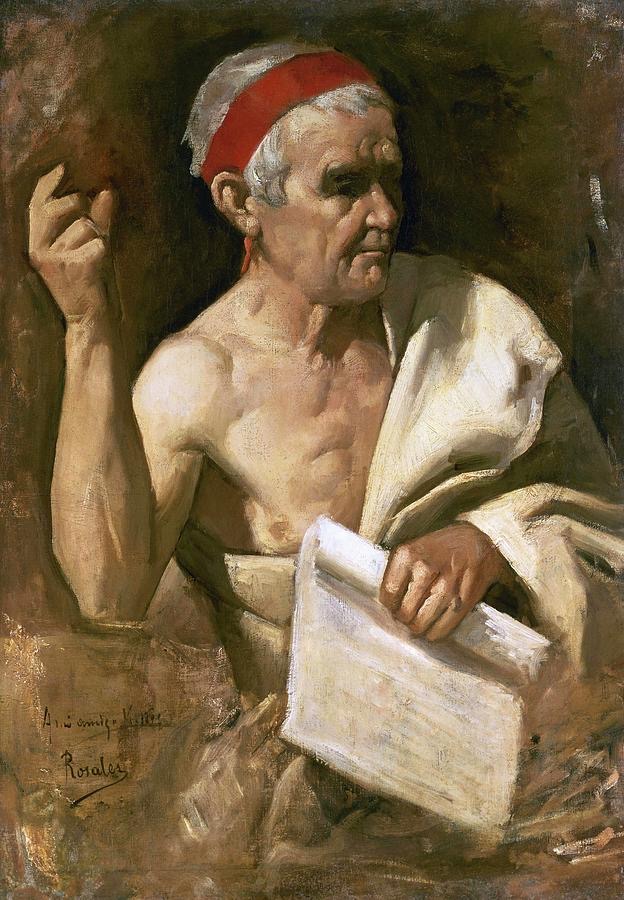
Few figures from antiquity are remembered as having survived exile from their homeland, navigated the dangerous politics of an imperial court, served as mentor to a future emperor, before being condemned to death by that very same ruler. Then again, few men lived a life as extraordinary as Lucius Annaeus Seneca, and fewer still left such an indelible mark on history.
As a philosopher, statesman and survivor, Seneca left behind a wealth of knowledge and literature that far outlived the Roman Empire itself. His ideas shaped various aspects of modern society ranging from Western philosophy to the political foundations of Republics. He wrote about finding inner peace while being surrounded by political chaos, and often preached moderation despite amassing a vast fortune throughout his life.
Nearly two thousand years after his death, Seneca remains one of the most intriguing figures of the early Roman Empire. His works continue to force us to contemplate valuable questions: how should we respond to hardship? Can a man remain virtuous even when he possesses immense power, and what really leads us to live a good life? The answers he left behind, shaped by great personal triumphs and horrendous tragedies, remain somewhat relevant even in our modern world.
Part 1: From Hispania to Rome: The Making of a Philosopher
Seneca was born in the Roman province of Hispania sometime around 4 BCE. He lived an incredibly privileged life as a result of his father, Seneca the Elder, who was both a celebrated rhetorician and member of the esteemed ordo equester or equestrian order, which served as the second most prestigious class in Rome. As both a wealthy and influential figure, Seneca the Elder ensured his son received the best education money could buy. At the tender age of four or five it is believed Seneca left his native Córdoba, and travelled to Rome where he began studying grammar, rhetoric and philosophy. Among his teachers were Sotion and the Stoic Attalus, both of whom left a lasting impression on him. Seneca became increasingly drawn to philosophy, and while he studied many different schools of thought, what resonated with him the most was Stoicism. This particular doctrine taught that most things in life, whether it be fame, tragedies or even wealth, were often beyond one's control, and that lasting peace often came as a result of mastering one's mind. At the heart of this philosophical discipline was virtus, a Roman ideal centered on moral excellence and the strength of one's character. Unlike other wisdom seekers, who often withdrew from society to better study the complexities of the mind and the material world, Seneca believed philosophy was to be lived. So rather than shying away from politics he embraced it with open arms, convinced that real knowledge was worthless unless it could withstand the pressures of the real world.
As Seneca grew older, he steadily climbed the Roman political ladder. First, he became a prominent advocatus, defending citizens in the courts before later securing a permanent seat in the Senātus Rōmānus. There he acquired a reputation as an orator due to his mastery of public speaking. Yet, in the volatile world of imperial politics, the very brilliance attached to his name soon made him numerous enemies. In 41 CE, he was accused of having an affair with Julia Livilla, the niece of Emperor Claudius, which resulted in severe consequences. While his life was spared Seneca was banished to the rugged island of Corsica. For many prominent Romans, exile was a sentence almost worse than death. It brought an end to their political career and in many ways resembled a living damnatio, wherein they were slowly erased from the living memory of the public. Seneca, however, refused to let his exile define him. Isolated from the turbulent political world of Rome, he focused on his studies, writing about resilience, grief and the true nature of wisdom. This led him to conclude that peace came not from favorable circumstances, but from the strength of one's character. Fortuna may come and go, but virtus itself could never be confiscated. By 49 CE, Seneca's fortunes had shifted, after Claudius' wife Agrippina decided to recall him to Rome and employed him as a mentor to their child, Nero. At the time, neither could have imagined just how much one act would rewrite the entirety of Roman history.
Part 2: The Rise of an Emperor and the Death of a Philosopher
In 54 CE, Emperor Claudius died, either from natural causes or, if rumours are true, poisonous mushrooms at the hands of his wife. With his untimely death, the reins of the Roman Empire were passed into the hands of the sixteen-year-old Nero, and standing beside him as one of two main advisers was none other than Seneca. The early years of his rule were, by Roman standards, unusually calm. Taxes were reduced, the Senate remained largely content, and public order improved. To some historians, it was a brief aetas aurea, or golden age. During this time Seneca amassed a great personal fortune, something that critics couldn't help but point out. Writers, both ancient and modern, found this contradictory for a figure who often spoke of living moderately. Seneca himself argued that philosophers need not shy away from wealth; they should simply avoid becoming enslaved by it. Whether he himself lived by that principle remains somewhat of a personal quaestio, one that historians remain divided on. As Seneca slowly became one of the richest men in the Empire, Nero’s character steadily darkened. His unwavering confidence gave way to suspicion, before eventually descending into cruelty. As the emperor's actions became increasingly unpŕeidicble, Seneca's influence faded.
After the death of his fellow advisor Burrus in 62 CE, Seneca decided it was time for him to retire, even offering to surrender most of his fortune to do so. Nero outright refused his request. Even so, Seneca gradually retreated from public life anyway, and devoted himself once more to his philosophical studies and writing. It was during this final chapter of his life that he wrote what is often considered his most influential work, Letters to Lucilius. Seneca’s story reached its tragic end in 65 BC after Nero uncovered the so-called Pisonian Conspiracy, a plot to end his life. How deeply Seneca was involved remains a matter of debate. At the time it didn't matter as Nero himself had already reached a verdict of his own, and believed his former mentor to be heavily involved. For this crime, Seneca was ordered to take his own life.
According to the account of the Roman historian Tacitus, Seneca faced his death with exceptional courage, and spent his final hours discussing philosophical matters with his friends even as he calmly opened the veins in his arms. In many ways, he left the world embodying the very Stoic ideals that he had spent his life teaching. His death became one final lesson: that dying itself is neither good nor evil, simply a part of human existence. Few expressions capture this quite like the famous Stoic quote, Memento Mori, or remember that you will die. Seneca himself made sure the end of his own life gave those words lasting meaning.
Bibliography:
Griffin, Miriam T. Seneca: A Philosopher in Politics. Oxford: Oxford University Press, 1976.
Tacitus. The Annals of Imperial Rome. Translated by Michael Grant. London: Penguin Books, 1956.
Seneca. Letters from a Stoic. Translated by Robin Campbell. London: Penguin Classics, 1969.