How does a regime led by a few powerful people keep the majority of the population from rising against them? By using bread and circuses, of course! To maintain control and distract the population from action, the government organizes and promotes a variety of events, games, and celebrations that keep people focused on joyful things rather than on the real issues. In other words, look, shiny!
Panem et circenses was Rome’s version of ‘keep them distracted.’
The term panem et circenses, or bread and circuses, comes from the satirical poem, 'The Emptiness of Power' by Decimus Junius Juvenalis, or simply Juvenal. The term, which rose to prominence at the height of the Roman Empire in the early 2nd century CE, has since appeared in the modern lexicon to mean that, beneath the quick dopamine fixes and distractions, under the glitz and glamor of entertainment and riches, it is all, in reality, a diversion to keep focus off the real issues that exist within the state.
At its core, the idea of bread and circuses in Roman history was a means by which the men in power manipulated the poor, the enslaved, and the working class by diverting attention from the notable problems that plagued Rome. From overcrowding to inflation to unending wars to food shortages, Rome’s issues had become undeniable. Politically, Rome had shifted from its Republic era to the Imperial era, with the Senate’s power notably restricted. Taxes were on the rise, and the military stretched across the Mediterranean, Middle East, North Africa, and Europe, fighting a variety of enemies while conquering new lands, draining resources and money from Rome's coffers.
In the city of Rome itself, the tenements were overflowing, and slums had spread to accommodate an influx of people seeking opportunities in the urban heart of the Empire. Shoddy construction of hastily built apartments had led to numerous catastrophes, and a large population of Rome's poorest were homeless or living in dilapidated lean-tos mere feet from some of the wealthier residents and their sprawling estates. The cities were crowded and disgusting, with filth coating the stone streets. As a result, disease was common and rampant, and plagues loomed on the periphery.
Tensions over the lack of space and rising expenses mounted, building fury among the poor and working classes, with hunger as the main cause. Grain, the most important commodity, was imported from across the Empire to different regions, but had become difficult to obtain due to shortages and droughts. Constant war led to the demand for grain to be shipped from prosperous farmland to the front lines, rather than to the cities. When the hungry Romans eventually got their precious grain, everything was exorbitantly priced, as high demand and low supply allowed merchants to gouge the poor for every denari (Roman silver coinage) they had. Riots, in turn, were common, and it became an expensive endeavor, of life and limb, to live in the imperial realm.
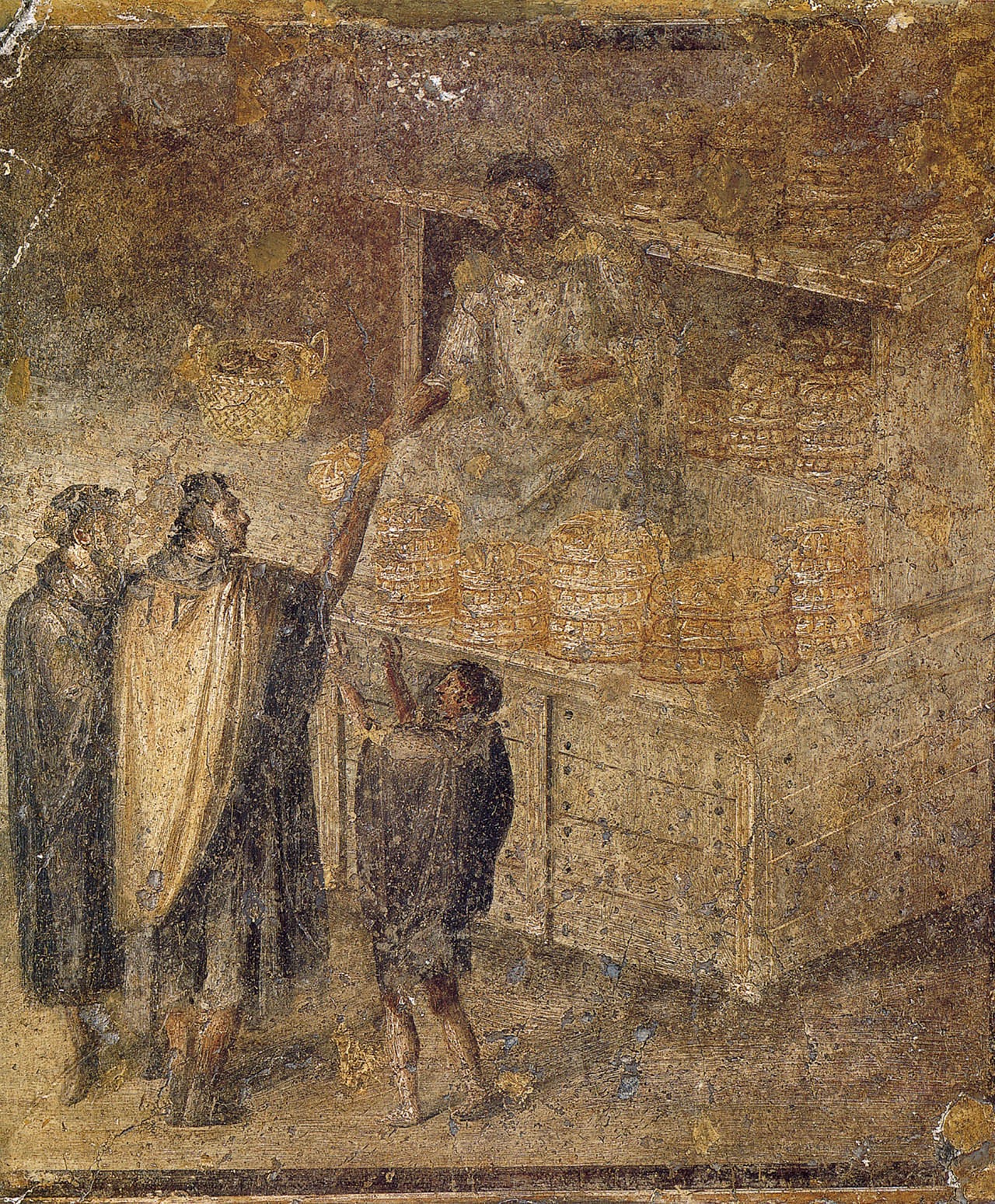
The Empire, it seemed, was not as beautiful as it had been made out to be. Ordinary people vastly outnumbered the elite by the millions and, if united, could have threatened the very foundations of Roman power. Outbreaks of violence and unrest deeply frightened Rome’s wealthy and ruling classes, who understood how fragile their authority could become if the masses ever organized against them. In response, the government turned to a simple but effective solution—panem et circenses or ‘bread and circuses.’ By providing free grain, lavish games, gladiatorial spectacles, chariot races, and endless public entertainment, Roman leaders sought to distract the population, ease social tensions, and maintain control over an increasingly restless society.
During his reign 41-54CE, Emperor Claudius introduced an annual 93-day series of revels in urban centers and towns, all of which were free for the masses of the Empire to attend. This included free bread and access to games, entertainment, processions, and religious and cultural festivals. For a brief moment, everything would appear copacetic, when in reality, something was rotten in the state of Rome.
Fast forward a thousand years, and the phrase still feels surprisingly modern.
Today, we do not attend gladiator fights, but entertainment is everywhere. Sports leagues fill massive stadiums. Streaming platforms release endless shows. Social media provides constant distractions. None of these things is bad on its own; after all, humans have always enjoyed stories, games, and spectacle. But Juvenal’s warning still makes people think. Are we sometimes so entertained that we forget to pay attention to larger issues? Do flashy headlines, celebrity news, or viral trends sometimes pull attention away from important conversations?
Because while we’re busy being entertained, things are happening behind the scenes. Real decisions are being made, quietly. Policies shift, institutions evolve, and systems change while the public watches the next headline, the next trending video, or the next viral controversy. And unlike Rome, there’s no forum where we can gather and demand accountability, not when everyone’s glued to their own private Colosseum.
Juvenal wasn’t wrong. Bread and circuses are powerful. They work. They always have. The question is whether we notice when they’re being used on us. And if we do, whether we care enough to turn off the circus and ask what is really going on in the Senate.
Bibliography:
Ellis, Linda. “A Brief Look at Juvenal’s 'Bread & Circuses.'” Medium. August 23rd, 2019.
Juvenal. “The Emptiness of Power” from “Satires.” Poetry in Translation.
Sanford, Eva Matthews. “Bread and Circuses.” The Classical Weekly vol. 45, no. 2 (1951): pgs. 17–21.