Hypatia of Alexandria, a name that should be spoken with the same reverence as other ancient scholars like Zeno of Sidon, Pythagoras, or Archimedes, led a fascinating life of scholarly pursuit amid political and religious upheaval in the twilight years of the Roman Empire. She helped make Alexandria one of the most important centers for education in the world. Although her murder remains the most memorable event of her legacy (spoilers!), she is better remembered as an important figure in education, philosophy, and mathematics as Rome teetered on the edge of collapse.
In 286 CE, Rome was divided into Eastern and Western Empires, officially becoming separate entities in 395 CE. By the end of the 4th century CE, Rome was no longer a singular powerhouse in the Mediterranean, but a realm in its death throes. The East continued to maintain a tight and relatively successful grasp on its territories, while the West struggled to maintain its hold on the remains of its state, now a fraction of its original size. Inflation, civil unrest, political corruption, and disillusionment permeated the soul of Rome, and at its gates, Germanic tribes and the Huns were ravaging the lands and pushing closer towards the capitals of Rome and Constantinople, placing enormous pressure on the already fragile state.
It was also during this period that Rome transitioned from paganism to Christianity. In 337 CE, Roman Emperor Constantine, who had legalized Christianity in 313 CE, converted to the faith on his deathbed after spending much of his life promoting religious tolerance. Christianity’s popularity grew, eventually being named the official faith of the Roman Empire(s) in 380 CE under Emperor Theodosius I. And like all religions, not all believers are tolerant of “others,” and as Christianity took hold across the Mediterranean, hatred and fervor took root as the more extreme practitioners pushed for a place in the church and became a dominant power competing with secular governments.
But you may be wondering: what does any of this have to do with Hypatia? Hang on, dear reader, we will get there!
In many ways, Hypatia was born to be a scholar, and while much about her life remains unknown, what we do know reveals how much she and her family valued education. It is believed she was born around 370 CE in Alexandria, Egypt, although some academics believe she was born around 350 CE; after all, a lady never reveals her true age! There aren’t any surviving records regarding the identity of her mother or if she had any siblings, but Hypatia’s father, Theon of Alexandria, was well known. Theon was a practitioner of the old Roman faith (pagan) and a highly regarded astronomer, writer, mathematician, and philosopher in his own right, as well as the last confirmed head librarian of the famous Library of Alexandria (yes, that library, the one that every historian weeps over at its mention) and member of the Alexandrian Museum. It is believed Hypatia worked closely with her father and may have even helped him with his commentary on Euclid and Ptolemy.
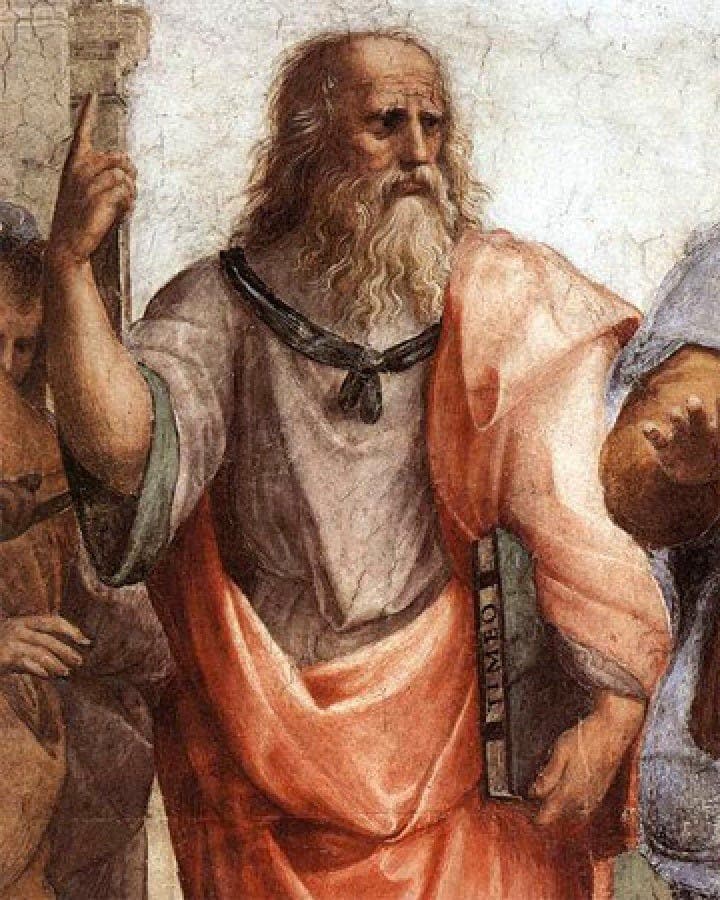
Hypatia became a beacon of academia, surrounded by some of the brightest minds in ancient Alexandria, one of antiquity’s greatest intellectual centers. She was a rare exception to the patriarchal structures of the period, a woman who rose to prominence in the worlds of philosophy, math, and science. She read widely and embraced religious differences as simply different ways of approaching and understanding the world. She taught astronomy, mathematics, and Neoplatonism—a philosophical and theological tradition based largely on the works of Plato and Plotinus, which held that all reality ultimately emanated from a single, transcendent source known as “the One” and became one of Alexandria’s most celebrated teachers and philosophers.
Hypatia never married and led a life devoted to her studies and her students. Thousands of pagan, gnostic, Jewish, and Christian pupils attended Hypatia’s classes and lectures, and it was not long before she became one of Alexandria’s most honored and respected tutors, even among her enemies. She gave speeches and discussions on a variety of subjects, as well as edited and wrote commentaries on papers and texts on topics in astronomy, philosophy, geometry, and algebra.
If you have a crazy aunt who won’t vaccinate her kids, you know all too well that academics and religion do not always mix, especially when fanaticism is involved. At the time, Alexandria teetered on the edge of civil unrest as religious and political factions competed for influence. Between 412 CE and 415 CE, violent clashes among pagans, Jews, and Christians left members of each community dead. After one particularly brutal confrontation in which a group of Jews killed a number of Christians, an escalating power struggle between church and secular authority further destabilized the city. Cyril, the powerful archbishop of Alexandria, increasingly sought to assert Christian authority over the city and its religious communities, bringing him into conflict with the imperial prefect Orestes. Hypatia, meanwhile, became entangled in this struggle. Some of Cyril’s more radical supporters regarded the prominent pagan philosopher with suspicion, believing that her intellect and considerable influence over powerful men, including her friend Orestes, stood in the way of reconciliation between the prefect and the bishop.
In 415 CE, Hierax, an associate of Cyril, was arrested and publicly punished by Orestes after his presence at a Jewish gathering aroused suspicion and inflamed tensions between Alexandria’s Jewish and Christian communities. Soon afterward, a violent confrontation erupted in which a group of Jews killed a number of Christians. Cyril responded by leading his supporters against Alexandria’s Jewish population, seizing their synagogues and expelling many Jews from the city despite Orestes’s opposition. Jewish property was plundered, and the synagogues were subsequently placed under Christian control.
Motivated by their successes, the Christians were invigorated and sought to continue their frenzy against other enemies. Taking to the streets, they looked for further victims, specifically a well-known female pagan scholar. Hypatia was either attacked in her classroom or torn from her chariot, set upon by a mob of around 500 Christian men. The fanatics pulled her by the hair into a church, ripped off her clothing, sexually assaulted her, beat her with stones and sticks, and tore her flesh from her bones with abalone shells and ostraka (pieces of tiles or pottery) before throwing her onto a pyre. The library and museum were then also looted.
Many historians see the brutality of Hypatia’s death as part of the death rattle of academia in the Western Roman Empire, and the final hours of paganism as a religion, as Christianity quickly became the predominant faith. Yet Hypatia was neither a witch nor a villain. She was a scholar who devoted her life to mathematics, philosophy, astronomy, and teaching. Hypatia’s death remains a haunting reminder of what can happen when political rivalry, religious extremism, and fear of knowledge collide.
References:
Dzielska, Maria. “Hypatia of Alexandria.” Cambridge: Harvard University Press, 1995.
Mark, Joshua J. “Hypatia of Alexandria.” World History Encyclopedia. September 2nd, 2023.
Richeson, A. W. “Hypatia of Alexandria.” National Mathematics Magazine vol. 15, no. 2 (1940): pgs. 74–82.