A stadium packed with 50,000 screaming fans. The crowd is roaring, the air smells of dust and sweat, and everyone is waiting for the main event. No, this is not the Super Bowl. It is the Colosseum in ancient Rome, and the athletes about to enter are gladiators. For Romans, gladiator fights were the ultimate entertainment. They were dramatic, dangerous, and wildly popular. In a world without Netflix, YouTube, or TikTok, watching people fight in an arena was considered a perfectly good way to spend the afternoon.
Professional fighters have always been popular, their dedication to their sport a testament to their hard work, resolve, and athleticism. In Ancient Rome, the gladiator was the most spectacular competitor in the Republic and Empire, fighting before crowds of excited onlookers from all walks of society. The life for a gladiator was intense and arduous, but the reward for success was immense, and for many, it was worth the risk.
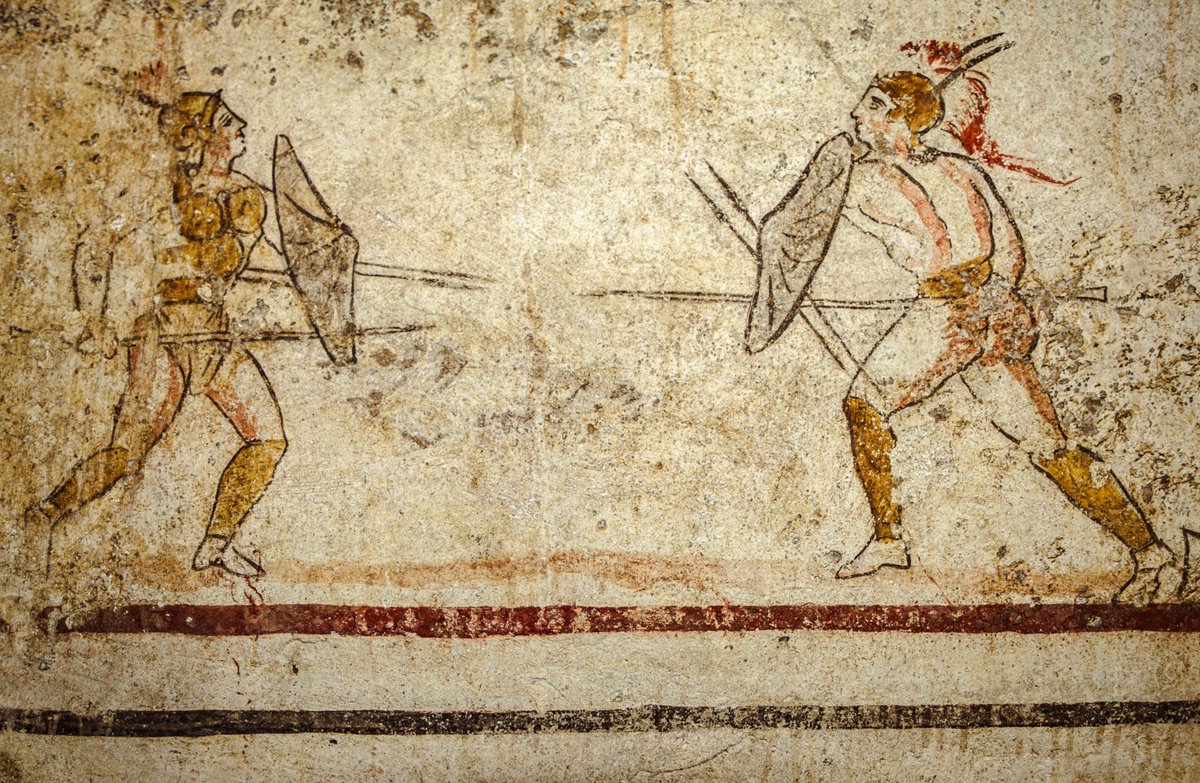
A gladiator, or a swordsman, gets his name from the Latin word gladius, meaning sword, the standard weapon of a soldier aside from his shield and javelin. Gladiators or gladiatores were not a Roman innovation but Etruscan, an ancient Italian peninsula culture that existed long before the foundation of Rome. Gladiators performed at funerals, festivals, and sporting events, and were one of the most popular forms of entertainment across the budding Mediterranean society.
Gladiators were men, most frequently slaves, who had been captured after a defeat to the Roman army or released from bondage, criminals, or free Roman volunteers, called auctoritas, who needed work as a means to get out of debt. Women also took part in the gladiatorial sport as gladiatrices, but were far less common than their male counterparts and often used only for exhibitions or novelty events.
Gladiators were infame, or part of the infamous class, meaning their lives were in the hands of their master and could be forfeited for use as desired. The lanista, or owner of the training school, would buy the future combatant, bringing the recruits to his ludus, or gladiatorial school. A doctore, or teacher, would lead the instruction of the gladiators. Usually a former gladiator, the doctore would enforce discipline and oversee their preparation, which included wrestling, boxing, weightlifting, weapons training, sparring, drills, and other exercises.
Those who had built their endurance and proved their skills were considered worthy to be called gladiators and would then take part in public matches at amphitheaters. They were seen as both performers and warriors, dressing in specific ways and fighting in particular styles. There were many types of gladiators, but the most popular were the Thraex, Murmillo, Samnite, and Retiarius. They differed in the type of armor they wore and weapons they bore.
Gladiators traditionally wore a subligaculum, or loincloth, resembling modern-day boxer’s shorts. Aside from that, gladiators wore armor, although it could be minimal and depended on the kind of gladiator they were. They would fight for the cheers of the adoring crowds, either taking on prisoners slated for execution or other combatants, or wild beasts such as lions and tigers or bears, as well as dogs, boars, elephants, leopards, hippos, and crocodiles (this was usually reserved for the bestiarii gladiator, or animal fighter).
Gladiators came from all over, including the Mediterranean, Southern Europe, the Middle East, the Iberian Peninsula, North Africa, Central and Western Europe, and the British Isles. They resembled strongmen, like the Mountain from Game of Thrones, with their muscles protected under a layer of fat. This kept their organs protected from injury, particularly slashes and bruises, and gave them plenty to burn when they trained. Their diet consisted primarily of carbohydrates and vegetables, such as sagina, a barley and bean stew, and some fruits, and they followed a strict training regimen to stay strong.
The best gladiators took part in major events and were popular among the people across class and station. The wealthiest spectators would hire gladiators to perform at private events or attend their gatherings and dinners, often taking part in mock fighting games at parties. At professional events, the gladiators would be heralded in and salute the crowd or emperor before fighting. Those who were injured or disarmed might try to yield, extending a finger to the sky to ask for mercy. The crowd and/or emperor would decide to be merciful or to end the gladiator’s life.
The combat itself was hard and risky, but death in the arena was not as common as perhaps portrayed in the films, especially since it was expensive to raise good warriors. Yet the risk-to-reward was equally great, and if a gladiator proved himself to be a great fighter, he might receive gifts, money, and maybe even his freedom. When a gladiator was finally released, he received a wooden sword called a rudis, symbolizing that he was no longer required to fight.
Gladiators continue to fascinate us today. Movies, books, and television still tell their stories. Perhaps it is because gladiators represent something timeless: the human love of drama, competition, and courage under pressure.
As the Romans might say, “Fortuna fortes adiuvat”—fortune favors the brave.
Bibliography:
Cartwright, Mark. “Roman Gladiator.” World History Encyclopedia. May 3rd, 2018.
Evans, George. “The Horrible Life of Gladiators: Revisionist History and the Violence of Roman Gladiatorial Games.” Vulcan Historical Review vol. 20, article 19 (2016) pgs. 184-189.
Miller, Marlee. “Gladiators: Types and Training.” The Metropolitan Museum of Art. August 1st, 2023.