Cleopatra, a name that evokes power, beauty, and ambition, remains one of the most significant figures in human history, her legacy still debated, discussed, and studied over two millennia after her death. Her intelligence and aspirations led her to be seen as both a viper and temptress, a woman whose words, wit, and charm could make even the strongest and most influential men in the ancient world bend to her will. But was this true?
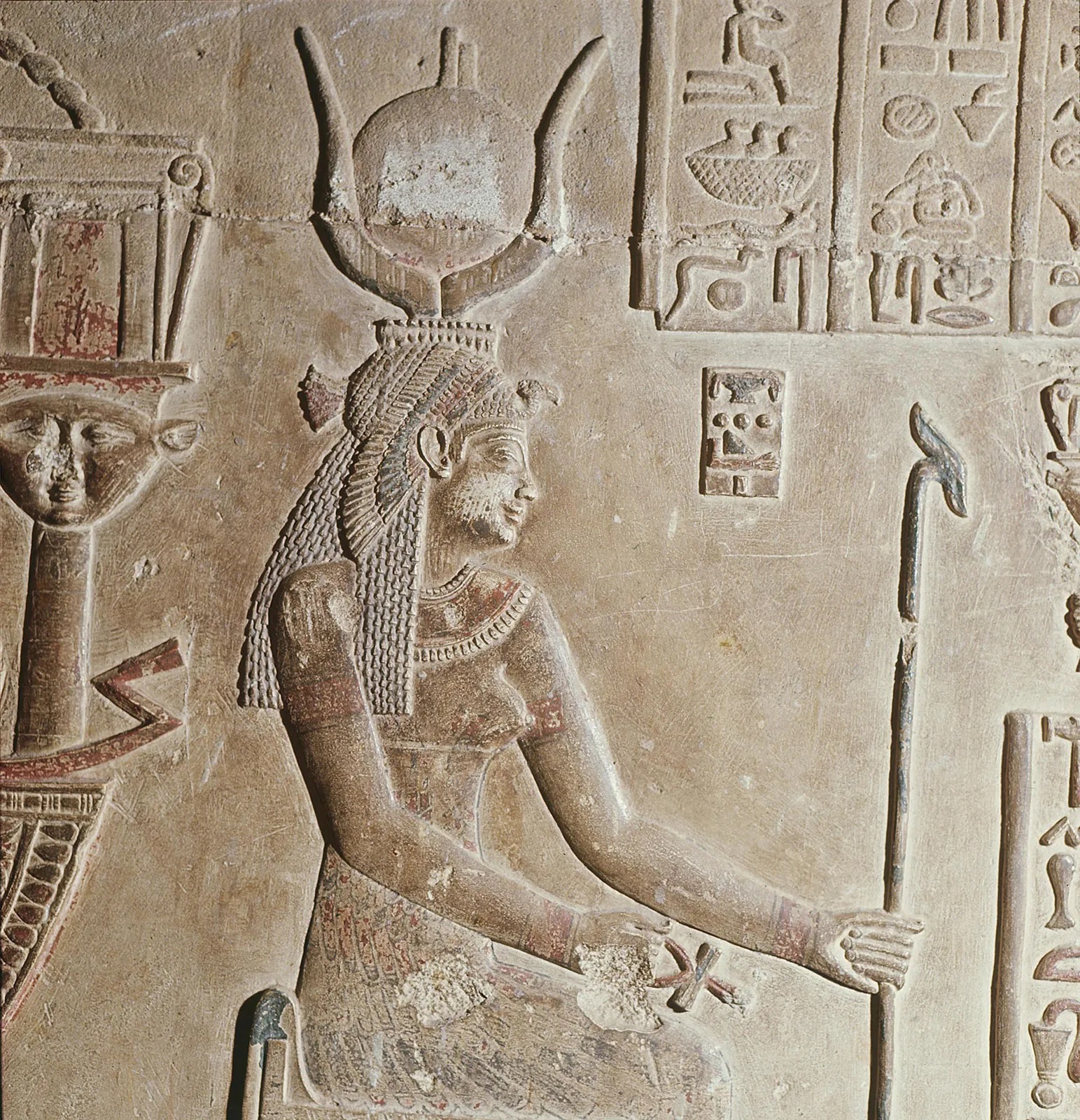
Cleopatra VII Philopator was born in 69 BCE into the royal family of Egypt, a descendant of the Ptolemaic Dynasty of Greek and Macedonian heritage; they had ruled Egypt since the death of Alexander the Great in 323 BCE. She had long been comfortable in a position of repute, witnessing negotiation and diplomatic ties ebb and flow under the rule of her unpopular father, Ptolemy XII Auletes. After his death in 51 BCE, Cleopatra became Queen at the age of eighteen and married her younger brother, Ptolemy XIII, to uphold the Egyptian convention requiring a female ruler to have a male consort, as well as the creepy tradition of pharaohs marrying their siblings.
A woman of intelligence, Cleopatra had mastered multiple languages, including Latin, Greek, and Egyptian, a language seldom learned by the Ptolemaic family during their reign, and was fluent in several other dialects and customs. The people loved her, but her court feared and resented her. Her ambassadorial prowess and language fluency let her speak directly with diplomats and representatives and maintain a straighter line of communication with notable officials, much to the ire of her counsel. Direct communication gave Cleopatra more adaptability to discuss matters of politics, economics, law, and policy without filters or manipulation by the court and her courtiers, building strong rapport with allies and even enemies. Cleopatra’s independence created constant tension with her advisors, led by General Achillas, Pothinus, and Theodotus of Chios, who eventually overthrew her in 48 BCE and installed her brother-husband, Ptolemy XIII, to rule under their sway. Cleopatra and her half-sister Arsinoë fled to Thebaid with some loyal supporters and soldiers, planning to return to Alexandria with an army.
Shortly after Cleopatra’s departure from Alexandria, the pharaoh had Roman Republic politician and general Pompey the Great, a family friend, killed when he arrived in Egypt seeking help and a chance to regroup from his loss to Gaius Julius Caesar. Caesar, the newly established Dictator of Rome, arrived in Alexandria soon after and declared martial law, capturing the young pharaoh and taking his place in the palace. Cleopatra saw this as a way to return to power and snuck back into the royal home to present herself to Caesar. He was greatly delighted by the appearance of the Queen, who was said to be brought into the chamber rolled up in a rug.
The two bonded quickly over ambitions of power and conquest, and Cleopatra knew the only way to maintain her power and Egypt’s independence from Rome, a far stronger realm than her own, was to use her intellect and beauty to masterfully position herself with Caesar. An alliance would be wiser than war, and good relations meant trade and opportunity. Caesar, likewise, understood that his efforts to keep and protect his power and place in Rome required money, and who else to give him the means to secure it than the Queen of the Nile? The two quickly became lovers, much to the ire of her brother-husband Ptolemy XIII, and Caesar restored Cleopatra to Egypt’s throne, which ultimately divided Egypt into two groups: those who supported Ptolemy and those who supported Cleopatra and Rome.
War erupted in Egypt, and Cleopatra convinced Caesar to help her fight Ptolemy. Unified in their cause, Rome and Cleopatra’s armies successfully defeated Ptolemy, who drowned fleeing the arrival of the Roman reinforcements in 47 BCE. Arsinoë, hungry for power herself, was declared Queen by General Achillas, but Cleopatra could not let this stand and used the Roman legions to capture Arsinoë, who was sent to Rome as a prisoner. Caesar spared her life and exiled Arsinoë to the Temple of Artemis at Ephesus, where she remained safely under the watchful but caring eyes of the temple guards, priests, eunuchs, maidens, priestesses, and officials. Cleopatra, unhappy with this development, knew Caesar would not allow for any act of revenge, so she bided her time.
In the summer of 47 BCE, Cleopatra bore Caesar a son, Ptolemy XV, or Caesarion, and established him as her heir to the throne of Egypt. Cleopatra was invited to Rome to stand as Caesar’s consort, and the Roman people praised her for her beauty. The Roman Senate, however, saw her as but another problem regarding controlling Caesar and was not won over by her wit and charm. Cleopatra was under his protection, and in turn she gave him a strong alliance with one of the most distinguished, albeit weak, authorities in the ancient Mediterranean.
Caesar’s assassination on March 15th, 44BCE, however, changed everything for Cleopatra. It forced her and Caesarion to return to Alexandria to escape a similar fate. After Caesar’s confidant and ally, triumvir Mark Antony, and his affiliates defeated the assassins at the Battle of Phillipi, he was named ruler of the eastern provinces and Egypt, and he asked for Cleopatra to meet him to discuss a concerning accusation: did she help two of Caesar’s assassins, Cassius and Brutus, in the plot or their escape before the Battle of Phillipi? A woman not to be summoned, Cleopatra made it clear she would never be commanded by a man to do anything she did not want to and would answer a request for her presence when and how she pleased: at her own leisure.
Despite an economic crisis plaguing Egypt, Cleopatra designed her arrival in Tarsus to be elegant, luxurious, breathtaking, and magnificent. Arriving before Mark Antony, she did so clothed in fine gold and silk trappings, appearing adorned as the Roman Goddess Venus. Her beauty and presence stunned Mark Antony, who, like Caesar, was immediately enamored by the Egyptian ruler. Cleopatra knew to win Mark Antony’s heart would not only protect her but also give her a powerful ally. To Mark Antony, Cleopatra represented a highly desired partner, with intellect and beauty unrivaled in Rome, and wealth that secured his place in power. The two soon became lovers, ultimately marrying a few years later.
In 41BCE, Cleopatra saw the opportunity to finally get revenge on Arsinoë, who still had some favor in Rome and Egypt. Tired of her sister posing a potential threat to her power, Cleopatra convinced Mark Antony to send an assassin to eliminate Arsinoë. The killer attacked Arsinoë on the steps of the Temple of Artemis at Ephesus, murdering her on sacred ground in front of horrified temple personnel. As it was a holy site, Arsinoë’s slaying was a blatant disregard for Roman temple custom of asylum, and the murder sent shockwaves throughout Rome. Emotions ran high, and fury toward Cleopatra continued to grow, particularly after Mark Antony and Cleopatra had three children. Mark Antony, to marry Cleopatra, divorced his wife Octavia in 32BCE, who was the sister of Octavian, the future Emperor of Rome who would rule Rome as Augustus Caesar five years later.
Octavian grew tired of Mark Antony and his disrespect, especially his affair with Cleopatra, and tensions between them grew violent. Civil war erupted, and Cleopatra and Mark Antony fought against the might of Rome but, after a brutal defeat in 31BCE at the Battle of Actium, their time in power had run out.
In the summer of 30BCE, as the Roman legions under Octavian took Egypt, Mark Antony received word that Cleopatra had died. Heartbroken, the triumvir stabbed himself, only to learn that she was alive, safe in Alexandria. Mark Antony was brought to Cleopatra, dying, and fell into his eternal sleep beside her. Octavian demanded surrender and asked Cleopatra to meet with him to discuss terms, which included returning to Rome as a captive. Cleopatra, despondent and unable to engineer her way out of the situation (she could not seduce Octavian), asked for a moment to prepare herself. When given privacy, Cleopatra poisoned herself or, according to legend, allowed a venomous viper to bite her breast and died. Her son by Caesar was executed, and her children by Mark Antony were sent to live with Octavian’s sister, Mark Antony’s former wife.
Cleopatra’s story did not end there. For centuries, Roman writers shaped her legacy as a woman whose beauty controlled powerful men. But modern historians increasingly recognize her as something far more impressive: a capable ruler navigating one of the most dangerous political environments in history. Cleopatra ruled during the final collapse of the Roman Republic, a time when even Roman leaders struggled to survive. That she held power for two decades, maintained Egypt’s wealth, and remained a central figure in Mediterranean politics speaks to her remarkable ability.
In the end, Cleopatra was not simply a seductress. She was a strategist, a diplomat, and a queen determined to protect her kingdom. As the Romans said, fortuna audaces iuvat, or fortune favors the bold. And Cleopatra, without question, was bold.
References:
Freeman, Charles. Egypt, Greece, and Rome: Civilizations of the Ancient Mediterranean. Second Edition. Oxford: Oxford University Press, 2004.
Mark, Joshua J. Cleopatra VII: The Last Great Pharaoh of Ancient Egypt. World History Encyclopedia. January 15th, 2026.
Shaw, Ian. The Oxford History of Ancient Egypt. Oxford: Oxford University Press, 2004.